-1.png?width=1200&height=312&name=Unilink%20-%20full%20colour%20with%20strapline%20(1)-1.png "Unilink")
Scottish Prisons Make Video Sessions Available Across The Country
The Challenge
The Scottish Prison Service (SPS) has a duty to protect the public by keeping those who have been sentenced in safe and secure custody, while delivering public safety through constructive engagement with those in care, focusing on recovery and reintegration.
SPS directly operates 14 prisons, with an additional facility managed by a private sector provider under contract. Currently, there are just over 8,000 prisoners in SPS care.
The SPS recognises the benefits of maintaining family ties and introduced specific standards to encourage family contact in 2013, with five key standards: access, communication, participation, respect, and safety.
The 18th Prisoner Survey conducted by SPS in 2024, highlighted how communication with prisoners has evolved since the previous survey in 2019: 79% of inmates now use telephones to stay in touch (up from 58% in 2019), in-person visits rose to 51% (43% in 2019), whilst letter writing fell to 40% (57% in 2019). Email and video calls featured for the first time in the report, with 35% of respondents receiving emails, and 26% participating in video calls.
The most commonly reported issue was the distance between the prison and respondents’ homes (72%), followed by limited transport options (65%) and the cost of travel (57%).
The challenge of supporting contact for prisoners with friends and family was heightened by the COVID-19 pandemic. Following national guidance to protect the public and people in care and prevent the spread of the virus, SPS suspended all physical visits in prisons.
The Solution
When the Covid-19 crisis began and traditional face-to-face visits were suspended in prisons around the world, SPS sought to have Unilink’s Video Sessions service installed in all Scottish prisons.
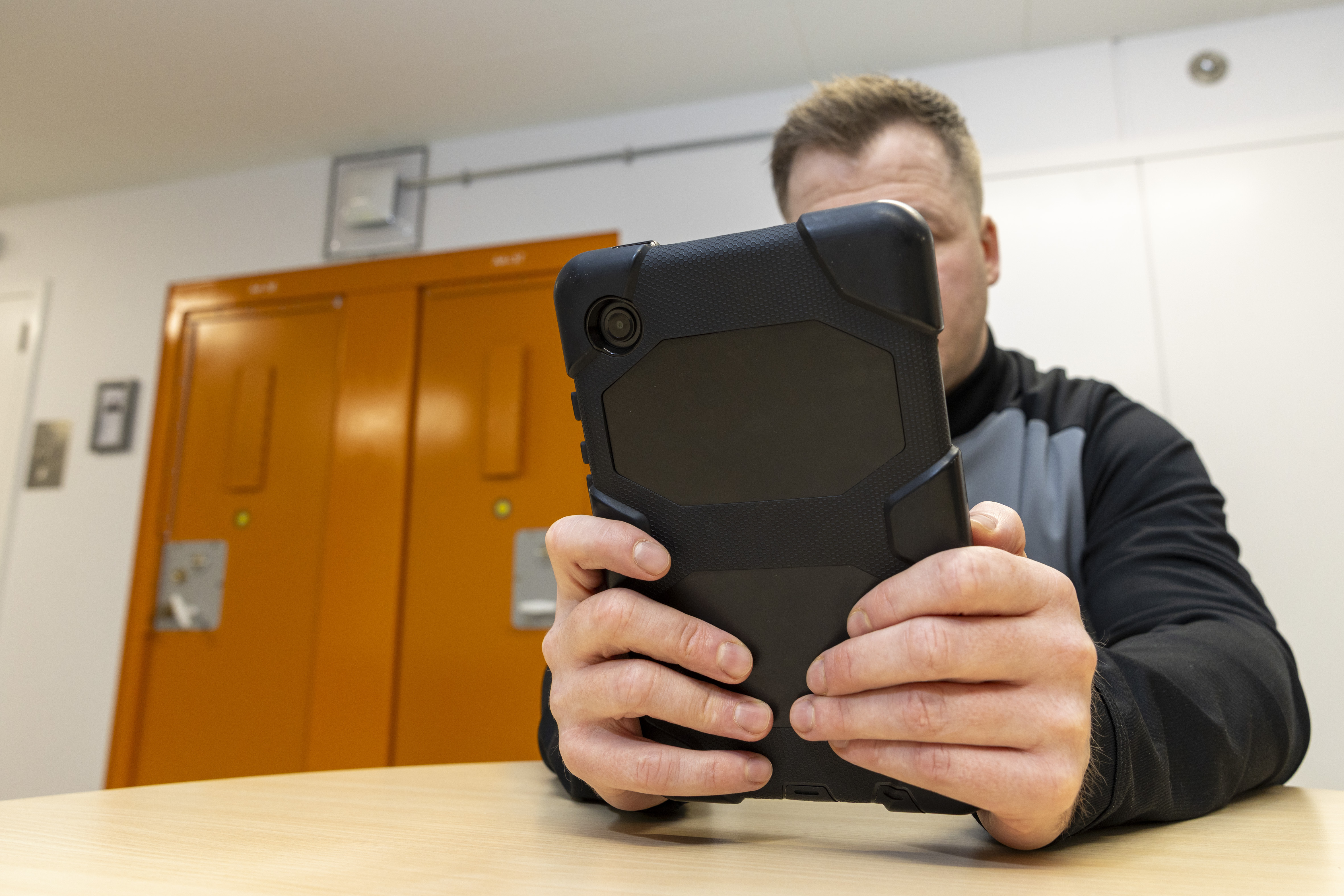
Video Sessions is a secure visual communication method for prisoners and their families, regardless of location. This cloud-based solution uses secure, encrypted peer-to-peer connections that prevent potential call interception by third parties. All sessions are pre-booked and approved by the establishment, and only authorised visitors may participate in the video call. Facial recognition is used to verify and monitor visitors before and during the video session.
The service is free of charge for prisoners and prisons to use, and during the first months of the Covid lockdown, it was also provided free of charge to families.
Francis Toye, CEO of Unilink said “It is vital to provide every possible means to connect prisoners and their loved ones. Especially at challenging times like these, when the world is fighting the threat of Coronavirus and prison visits are closed. Prison time is tough, especially under lockdown with no family visits and I am really proud that Unilink is helping in this way to reduce the tension caused by the lockdown”.
Video Sessions have several benefits to prisoners, their families and prison staff. The service is reliable, low-cost and easy to access on any browser-enabled device - phone, tablet, laptop or PC. The sessions last up to 60 minutes, are accessible from anywhere in the world, and remove the cost of travel to and from prisons. They help prisoners keep in touch with their loved ones, which improves their mental well-being and promotes positive parenting. Staff benefits include control over the scheduling of sessions, and recorded sessions allow gathering of intelligence and preventing contraband smuggling by visitors.
"It is vital to provide every possible means to connect prisoners and their loved ones. Especially at challenging times like these, when the world is fighting the threat of Coronavirus and prison visits are closed. Prison time is tough, especially under lockdown with no family visits, and I am really proud that Unilink is helping in this way to reduce the tension caused by the lockdown." - Francis Toye | CEO of Unilink
The Implementation
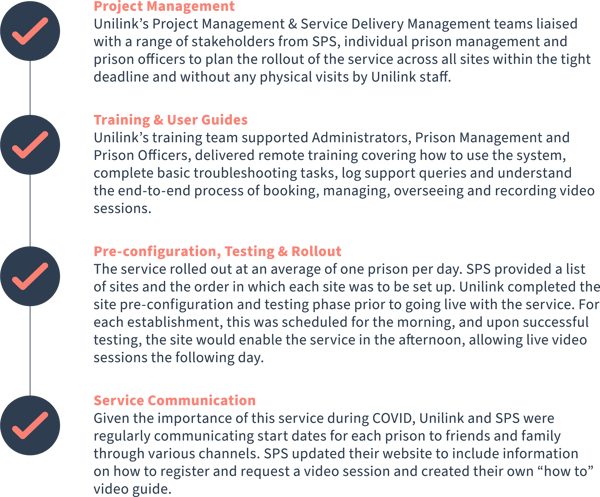
SPS approached Unilink for the Video Sessions service in March 2020, and awarded the contract in May 2020. Unilink worked closely with SPS to onboard, set up and configure the service to enable all residents in all prisons to conduct secure video calls. Within three weeks of contract award, the service was successfully rolled out across all 15 prison sites.
"It is absolutely our desire in the Scottish Government to ensure that virtual visits can continue after the pandemic because of the success of their roll-out and the impact that they have had." - Humza Yousaf MSP | Cabinet Secretary for Justice
Impact Since Installation
Since the service’s implementation, over 224,000 successful video sessions have been conducted. This is an average of 730 calls per week or over 3,860 video sessions conducted each month across the entire estate, and the service is working smoothly with little to no support queries. Communication helps the overall mental well-being of both prisoners and their loved ones and improves the chances of rehabilitation. Research from the Ministry of Justice in England and Wales shows that Prisoners who receive visits from a family member are 39% less likely to reoffend than those who do not. SPS Chief Executive, Teresa Medhurst, said: “The value of maintaining family links in custody is widely known as a fundamental element of rehabilitation. The provision of virtual visits and phones has been critical in the ongoing and very challenging circumstances.”
"Seeing our brother after months of not being able to visit him in person was really great. It’s really important for both our family and my brother to continue to have positive contact during this extremely difficult time when we have no idea when we may be able to see him in person. Thank you so much for making this possible." - Video Session Customer
The Future
Unilink is determined to continue providing Video Sessions beyond the Covid-19 pandemic, not as a substitute for physical visits but as an additional means of communication that strengthens family ties, improves the chances of rehabilitation, and enhances the overall mental well-being of both prisoners and their loved ones. This position is supported by the Scottish Government.
"It is absolutely our desire in the Scottish Government to ensure that virtual visits can continue after the pandemic because of the success of their roll-out and the impact that they have had. This reflects the Scottish Government’s commitment to maintaining safe, stable prison regimes – where conditions are conducive to and supportive of successful rehabilitation. Scotland’s approach to penal policy has helped drive down the country’s reconviction rate to its lowest level since comparable records began. And of course, less reoffending has contributed to keeping crime down and communities safe."
Humza Yousaf MSP | Cabinet Secretary for Justice
Let’s Build Better Justice
Partner with Unilink to shape the future of secure, fair, and effective justice systems.
Whether you are looking to explore our solutions, request a demonstration, or access our full library of case studies, we are here to help.
For more information about Unilink's Video Sessions, or to learn more about how we can support your organisation, please contact us.