-1.png?width=1200&height=312&name=Unilink%20-%20full%20colour%20with%20strapline%20(1)-1.png "Unilink")
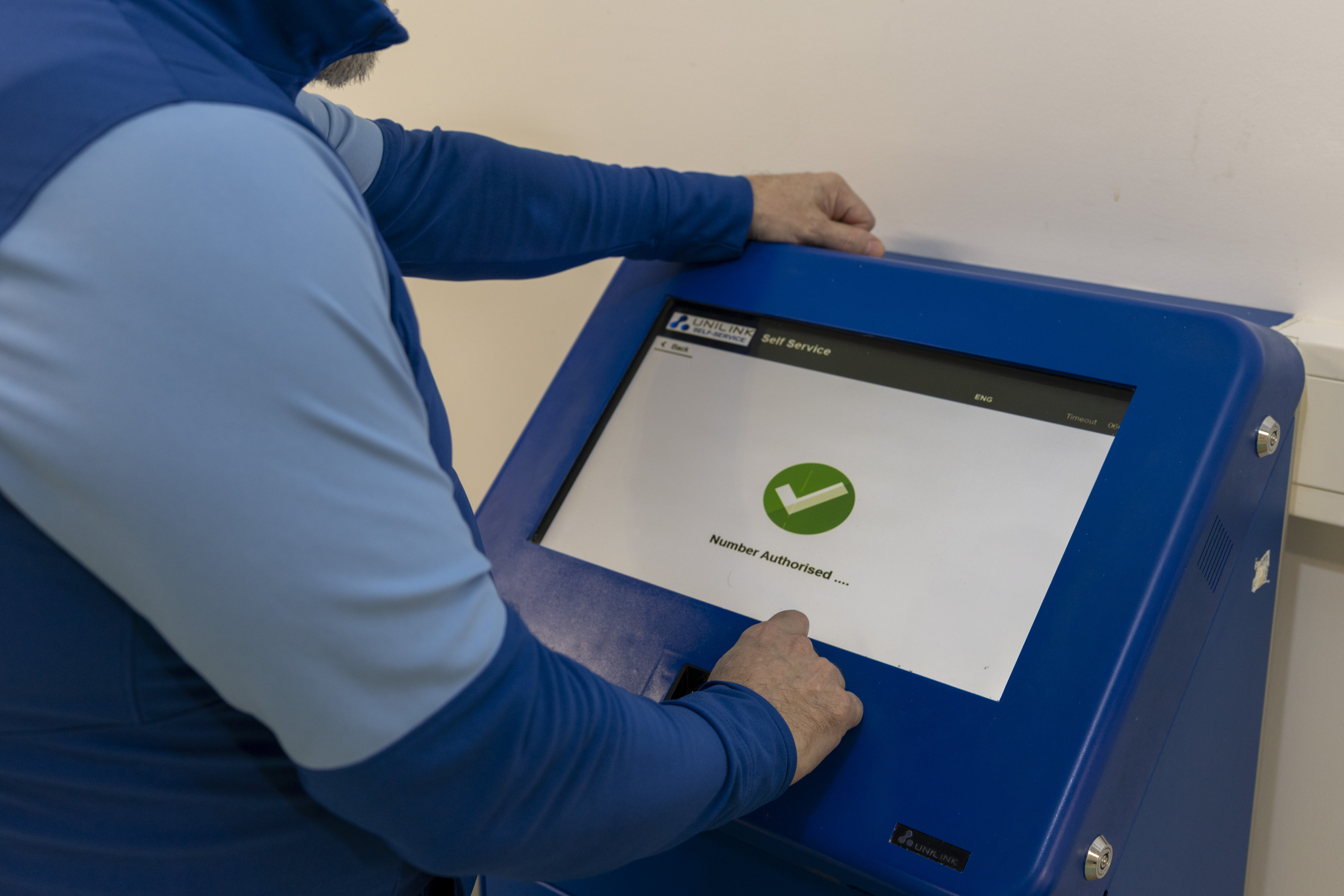
AIM Case Study: Addressing the Mental Health Crisis in Prisons
The Challenge
According to the Ministry of Justice Safety in Custody Statistics (2025): Prisons across England and Wales are facing an escalating mental health and safety crisis.
-
In the 12 months, the rate of self-harm was 859 incidents per 1,000 prisoners (74,521 incidents)
-
Assaults have increased compared with the previous year (6%)
-
Deaths in custody, including self-inflicted deaths, remain a serious concern
These figures highlight the growing complexity of
managing safety in custody and the increasing need for
earlier, more proactive intervention.
These figures highlight the growing complexity of managing safety in custody and the increasing need for faster, more preventative action. Globally, the challenge is even more stark. Research published in Systematic Reviews (Springer Nature) found that between 2000 and 2021, there were 29,711 suicides across 82 prison systems, with rates consistently higher than in the general population, typically ranging from 24 to 89 per 100,000 person-years.
Traditional approaches rely heavily on:
-
Self-disclosure from prisoners
-
Manual observation
-
Fragmented data across multiple systems
This creates a critical gap: early warning signs are often missed, particularly when individuals withdraw quietly rather than present an obvious risk.
Staff need a way to:
-
Identify vulnerability earlier
-
Build a clearer, real-time picture of behaviour
-
Intervene before the crisis point
The Solution: AIM (Alert, Intervene, Monitor)
AIM is a digital safety tool that brings together behavioural, transactional, and self-reported data to help staff identify individuals at risk of:
-
Isolation
-
Self-harm
-
Suicide
Crucially, AIM supports risk identification across the full custodial journey, from the point of arrival, through custody, and in the lead-up to release, helping to identify behavioural risks early and supporting interventions that can reduce harm and reoffending.
Rather than replacing professional judgement, AIM enhances it by:
Using a simple traffic-light system, AIM flags individuals who show signs of disengagement, such as reduced visits, missed meals, or inactivity, helping staff prioritise support where it’s needed most.
Key Results
An evaluation by Professor Danielle McDermott (October 2025), The Use of Technology in Detecting Risk of Self-Harm & Suicide in Prison: An Independent Evaluation of AIM, demonstrates that AIM delivers measurable improvements in prisoner safety:

In addition:
How AIM Works in Practice
Daily Monitoring
Staff routinely review AIM dashboards to identify individuals whose behaviour has changed, ensuring no one “falls through the gaps.”
Early Intervention
Flags, such as missed meals, reduced engagement, or withdrawal from activities, prompt welfare checks before issues escalate.
First 72 Hours Safeguarding
Early Risk Indicators highlight vulnerabilities during reception, ensuring immediate action for high-risk individuals.
Multi-Agency Collaboration AIM is used in:

Impact on Staff & Prisoners

Independent Validation & HMIP Recognition
AIM’s impact is evidenced not only through independent academic evaluation, but also across multiple HM Inspectorate of Prisons (HMIP) reports.
HMIP has identified AIM as “positive practice”, including:
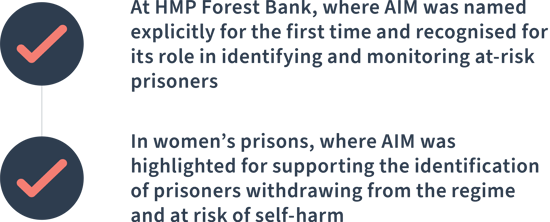
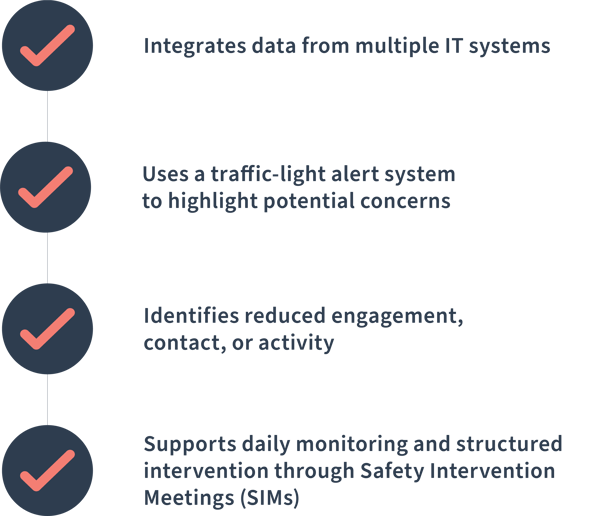
Inspectors found that AIM:
Crucially, HMIP noted that AIM enables staff to:
“Identify potential increases in isolation or self-harm risk and take appropriate action to safeguard individuals”
This consistent recognition across multiple inspections reinforces AIM’s role as a proven, innovative approach to safer custody
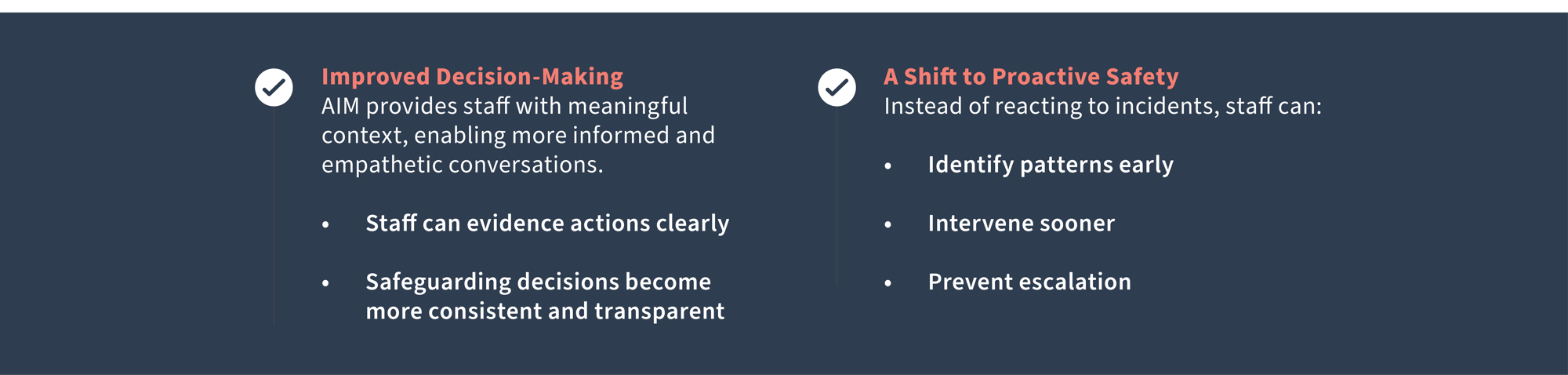
Why It Matters
Self-harm and suicide in custody remain among the most urgent challenges facing the justice system.
AIM addressed this by:
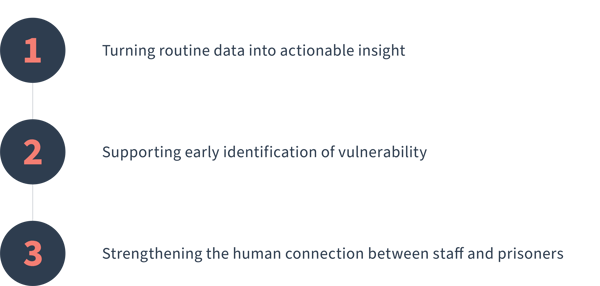
It represents a shift from:

Looking Ahead
AIM continues to evolve, with ongoing enhancements focused on:
-
Deeper behavioural insight
-
Improved data quality and engagement
-
Greater integration with wider prison systems
As prisons continue their digital transformation, AIM demonstrates how technology can:
-
Enhance professional judgement
-
Improve outcomes
-
Ultimately, save lives
Let’s Build Better Justice
Partner with Unilink to shape the future of secure, fair, and effective justice systems.
Whether you are looking to explore our solutions, request a demonstration, or access our full library of case studies, we are here to help.
For more information about AIM or how we can support your organisation, please contact us.